Ways God Designed the Human Body to Use Sodium
Created By God
You don't have to look far to find the best evidence for the Creator. In fact, your eyes are a good starting point. With a microscope, you'll find a billion more powerful evidences that patrol your blood every day—your feisty white blood cells, which could only be the handiwork of a Master Designer.
The Heart
To survive, we require a specialized pump that can deliver life-giving blood to all our body parts, day and night, year after year, without fail. To get the job done within the body of a living organism, the heart must overcome some incredible engineering challenges.
Iron Needed
Some 96% of our body is made of four common chemicals: hydrogen and oxygen (75%, mostly water), carbon (18%), and nitrogen (3%). The remaining 4% consists of many different minerals, such as sulfur, magnesium, and iron. Although some of these minerals come in small "trace" portions, each is essential for life.
Vestigial Organs
Vestigial organs are often used as evidence to argue in favor of Darwinian evolution. These organs are allegedly left over from our ancestors but are no longer useful or needed. For the creationist, there should be no problem with an organ or structure in man that has lost some functionality.
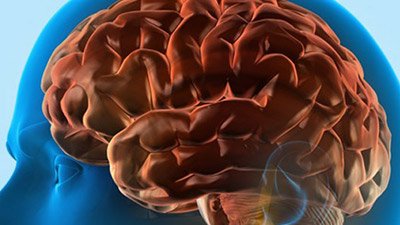
Brain
The human brain is so complex that scientists have barely tapped its intricacy. The quiet workings of the brain point toward its Designer.
Eyes
The Lord claims to be the Creator of the "seeing eye." (Proverbs 20:12) The sophisticated and elaborate design of the eye certainly points to His design.
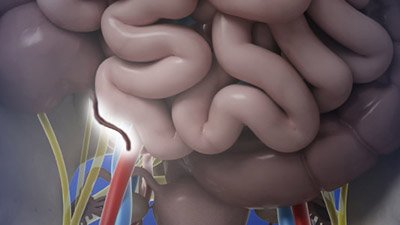
"Vestigial" Organs
Several organs have been labeled "vestigial" evolutionary relics with little or no function. These organs are now proving purposeful. It's the label, not the organs, that is vestigial.
The appendix, a safe house for good bacteria, is not a useless evolutionary leftover, but shows God's careful design in humans.
Look at those luscious pancakes! Can't you just taste them? You can—because of God's intricate design for your senses.
You might be surprised to learn that the most amazing electric machine is also the oldest.
The immune system does amazing work fighting off pathogens. But where did those pathogens come from?
God created our bodies with three types of muscle: smooth, cardiac, and skeletal.
Doctors dream of the day when they can send micro-machines up our bloodstream to attack cancers and deliver medicines.
Many people think of the skeletal structure as static, but as our ribs show, they are some of the most dynamic structures in our bodies.
PDF Download
March 6, 2020
With all the press on Coronavirus, it seemed appropriate to include a preliminary response. Truett McConnell University allowed us to reprint a recent blog.
The immune system serves more than just to "defend" against disease – it was designed to interact with microbes and to cleanse the body.
Our bodies can do some pretty embarrassing things, and we can't always stop them.
How our immune system protects us from deadly pathogens and parasites through antibodies to demonstrate how we're fearfully and wonderfully made.
Different parts of your skin sport different sensitivities to the world around you. If our skin were sensitive all over, we would be in big trouble.
The cells in your body are bustling with a protein, called kinesin, that faithfully delivers hefty "packages" to each destination.
Oct. 4, 2019
Human vision is incredible. The human eye and brain are adept at recognizing objects, even when they are not fully visible or oriented at different angles.
Oct. 1, 2019
Professor Stuart Burgess will be presenting, "The Wonder of Creation" and "Refusing to be Silent on Biblical Creation" at the AIG Mega Conference.
What if we could design a material for roads that would only get small cracks that resealed with chemical bonds as good as new?
Sept. 6, 2019
The way the human voice works is a marvel of acoustic engineering. Each person's voice reflects the way that the original sound is produced at the vocal cords.
Kids don't just play differently from adults, they think differently too—by God's design.
May 29, 2019
May 29 is World Digestive Health Day. The digestive system involves ten organs over nine meters of space, and contains over 20 specialized cell types.
The secret ingredient to continual breathing? Water.
When you're drifting off to dreamland, God unwraps one of his greatest presents.
You're not the same person you were yesterday. You may look and feel the same, but your body has been busy creating a new you.
Medical researchers have launched one of the most ambitious mapping projects ever—the human cell atlas.
Developmental biology is one of the most awesome biological disciplines to display the glory of God and the immeasurable value of human life.
Evolutionists claim that this similarity between humans and primates is evidence of common ancestry. Closer study verifies differences that point to a common Designer.
Aging is a result of Adam's fall. But can we do anything to ease the effects of aging or extend our life span?
Have you ever woken up just before your alarm went off? It's as if your body is wired with an internal clock. Actually, scientists have discovered trillions of them!
The media bombards us daily with messages about becoming younger and cheating death.

Aug. 13, 2018
Left-handedness is just another physical trait that is still shared by millions of people, like red hair, green eyes, or a cleft chin.
Your body produces toxic chemicals all day every day. Not to worry. Your liver's got it covered.
To keep us safe, our body coordinates with a vast network of foreign agents that have joined our side.
We've now unlocked some of our body's incredible secrets for rapid response to the ever-changing threat from microbe invaders.
God designed your brain to fill in missing details on the fly . . . with some interesting consequences.
Our reflex response to pain is a blessing, prompting us to withdraw at the first sign of trouble and preventing worse harm.
Let's take a look at the whole matter of aging and death from the perspective of both the Bible and science.
Sept. 1, 2017
Our tongues can sense five basic tastes with specialized nerve cells for each. A new study suggests our tongues can detect another "taste"—tasteless water.
As much as we complain about it, our bodies are made to store fat. And that's a good thing.
We've all heard that, compared to mammalian animals like dogs, humans have a poor sense of smell. Did you know that this notion is a 19th century myth?
Modern technology can help people in great need. But what if technology can be repurposed to enhance healthy people beyond their natural limits?
Every time a little leaguer steps up to bat, hidden powers come into play.
Your eye's complex ability to see color and motion points to the Creator. Even its limitations reveal His purposeful design.
A healthy body requires more than working parts. Somehow they must work together for optimum performance.
Feb. 6, 2017
Why do people in northern climates tend to have lighter skin while those in southern climates have darker skin?
This amazing organ quietly serves several invaluable roles in our blood system, keeping our bodies healthy.
The emphasis of this article is to explain some of the "very good" design and purpose of Staphylococci and other good, beneficial bacteria of the nose.
Your ears are delicate instruments, fine-tuned to hear a wide range of noises. What keeps them from being ripped apart by violent waves of loud vibrations?
Ways God Designed the Human Body to Use Sodium
Source: https://answersingenesis.org/human-body/
0 Response to "Ways God Designed the Human Body to Use Sodium"
Post a Comment